
Trail notes
- The National Weather Service advises swimming at least 100 yards away from piers and breakwalls, especially on the side with incoming waves.
- If you see whitewater, waves are at least 3 feet and dangerous currents may be present, according to the NWS.
- The NWS says 80 percent of drownings and rescues at Great Lakes beaches happen with waves of 3 to 6 feet.
People who grew up near an ocean sometimes underestimate the Great Lakes. Lake Erie is fresh water, and on a calm July morning it can look like a giant swimming pool. But wind builds waves on the lakes quickly, and the National Weather Service warns that dangerous currents and breaking waves are common in the region. Before a beach day in or around Cleveland, Ohio, a few minutes with the forecast and these basics can prevent a very bad afternoon.
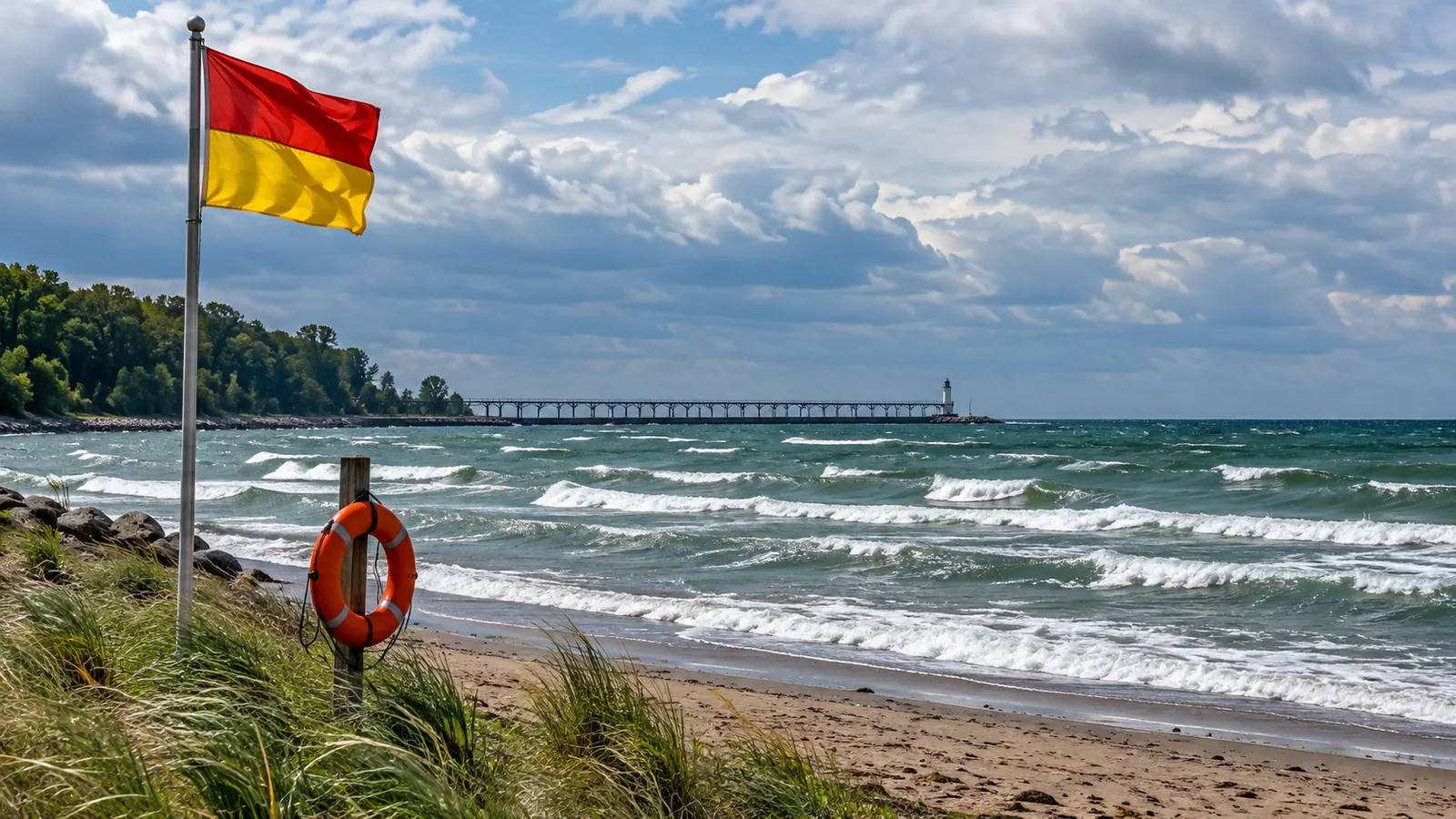
Read the waves first
The NWS gives one simple visual test: if you see whitewater, waves are at least 3 feet and dangerous currents may be present. Its Great Lakes safety page says the drowning threat goes up significantly above 3 feet, and that 80 percent of incidents, meaning drownings and rescues, happen with waves of 3 to 6 feet. Another NWS office puts it this way: 85 percent of current-related incidents happen when waves are 3 feet or greater.
Great Lakes waves also come quickly. The NWS says they arrive every 3 to 4 seconds on average in summer. At a 4-second rhythm, that is 225 waves hitting you in 15 minutes of swimming, which wears people out faster than they expect. Even small waves can knock you down hard.
Key takeaways
- Whitewater means waves of at least 3 feet; that is the time to stay on the sand.
- Keep at least 100 yards from piers and breakwalls.
- Never jump off a pier into the lake.
- Most Lake Erie beaches have no lifeguards, so bring your own flotation and a plan.
Steer clear of the pier
The NWS calls structures such as piers and breakwalls one of the biggest hazards on Great Lakes beaches. Water pushed toward the shore has nowhere to go but out along the structure, creating what forecasters call a structural current. It is often too strong to swim against, and swimming sideways out of it can send you back into big waves. Waves also bounce off the solid walls and combine with incoming waves, making the water near a pier steeper and more chaotic. Another NWS office notes that a majority of current-related incidents on the Great Lakes happen near piers and breakwalls.
The rules that follow are straightforward: do not swim within 100 yards of a pier, especially on the side where waves are coming in, and do not jump off piers, because you may land in a structural current.
Five currents and how to escape them
| Current | Where it forms | What to do |
|---|---|---|
| Structural current | Along piers and breakwalls | Get the attention of people on the pier, try to reach a ladder, and float to save energy |
| Rip current | Water rushing offshore through a gap in a sandbar | Stay calm, float with it until it slows, swim parallel to shore, then swim in |
| Longshore current | Parallel to shore when waves arrive at an angle | Swim directly back to the beach before it carries you toward a pier or rocks |
| Outlet current | Where rivers and streams enter the lake | Do not swim near outlets; move up or down the beach |
| Channel current | Between the shore and an island or rocks | Swim to shore, not to the sandbar; do not swim between nearshore islands and shore |
The NWS sums up the general escape in a few words: flip on your back, float, and follow the current or the safest path out of the water. When you can, swim along the shore and then back toward the beach. If you are too tired, keep floating and signal for help. One NWS office says rip currents alone account for nearly half of current-related incidents on the Great Lakes.
Tip: Outlet water is often warmer than the lake, which makes river mouths tempting on a cool day. The NWS specifically says to avoid swimming in or near them.
Kids and longshore currents
Longshore currents push swimmers down the beach a little at a time. The NWS notes children are especially susceptible in the area between the first and second sandbars, and that the drift can carry swimmers toward piers and rocks. Pick a landmark on shore and check that your kids stay in front of it.
Before you leave home
- Check the official forecast and look for statements about waves, dangerous currents or beach hazards.
- Pack U.S. Coast Guard approved life jackets, and if you have one, a throwable flotation cushion.
- Know the beach’s address in case you need to call for help.
- Check water quality too; see Lake Erie Beach Water Quality: How to Read Cleveland’s Swim Advisories.
At the beach
The NWS advice for arrival is to talk with a lifeguard or beach patrol first if there is one, because no one knows the day’s conditions better. Most Great Lakes beaches, it notes, are unguarded. At Headlands Beach State Park east of Cleveland, for example, the Ohio Department of Natural Resources says there are no guards, inflatable devices are prohibited, certified life vests are suggested, and the park takes part in a loaner life vest program. Find the life ring stations on the beach when you arrive.
If someone is in trouble
The NWS says that if you want to help, throw a life ring or flotation device if possible. Keep watching the person and call for help; near piers, remember the current that caught them is still there.
Respect the lake
The forecasters’ final word is simple: if you want to stay safe at the beach, respect the power of the lake, and when in doubt, don’t go out. Calm days are wonderful on Lake Erie. Rough days are better spent walking the shoreline, or exploring a spot like the Cleveland Lakefront Nature Preserve: Birds, Meadows and Skyline Views.